
Reusable Infrastructure Is Becoming a Competitive Advantage
As organisations across the UK aim to cut waste, run more efficiently and show stronger environmental responsibility, reusable infrastructure is becoming a real advantage—not just a sustainability project.
From construction sites and infrastructure projects to defence, outdoor events, and industrial maintenance, businesses are starting to question the value of temporary solutions that get used once and thrown away. Now, procurement teams are putting more focus on engineered systems that can be reused, moved easily, and adapted to different situations.
This shift shows a bigger change in how organisations think about value. The upfront price still matters, but factors like lifetime cost, durability, and flexibility are just as important now.
For manufacturers, this is a chance to use their engineering know-how to create products that keep providing value long after they’re first installed.
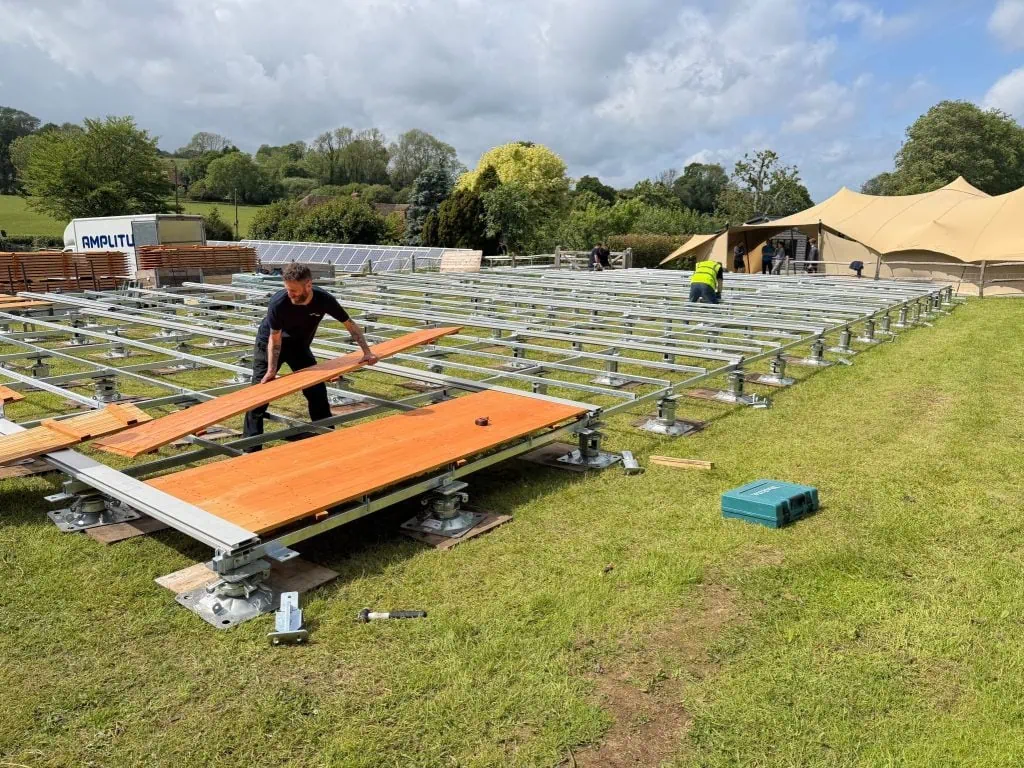
Regent Engineering, makers of the modular FloorStak flooring and levelling system, have seen more organisations wanting infrastructure they can use across different projects without losing out on safety or performance.
Stuart Whitehouse, Managing Director of Regent Engineering, says the conversation has moved beyond just sustainability.
“Customers are looking more at the total value a product brings over time,” he said. “Reusable engineered systems cut down on waste, but they also help productivity, make logistics simpler, and offer a reliable solution every time they’re used.”
Unlike old temporary access methods that rely on timber, makeshift platforms, or materials that break down after a few uses, modular engineered systems are built to handle being installed, removed, and transported over and over. That makes them ideal for sectors where projects move around a lot or need to be set up quickly.
This approach is already changing how organisations in defence, utilities, construction, and events buy infrastructure. They want systems that can be set up fast, adapted on the fly, and used again later. Reusable systems help cut down on material use, reduce storage needs, and make installations more consistent across different sites.
For manufacturers, the benefits go further than just helping with environmental reports. Needing fewer replacement products, cutting down on transport, and having less maintenance all add up to real cost savings over the product’s life and support important environmental and social goals.
Whitehouse believes that engineering-led design is key to making this work.
“The best engineering fixes problems again and again,” he said. “When a product can be used in different places over time, customers get more than just a greener option—they get more resilience, quicker setups, and better value in the long run.”
As businesses keep balancing productivity, sustainability, and costs, reusable infrastructure is becoming more than just a green option. More and more, it’s seen as a smart investment that helps organisations work more efficiently and get the most from what they already have.
For manufacturers who can combine strong engineering with practical, reusable design, this shift is a chance to create products that deliver value long after one project is finished.