

Regent Engineering Gears to Support UK Sovereign Manufacturing Capability
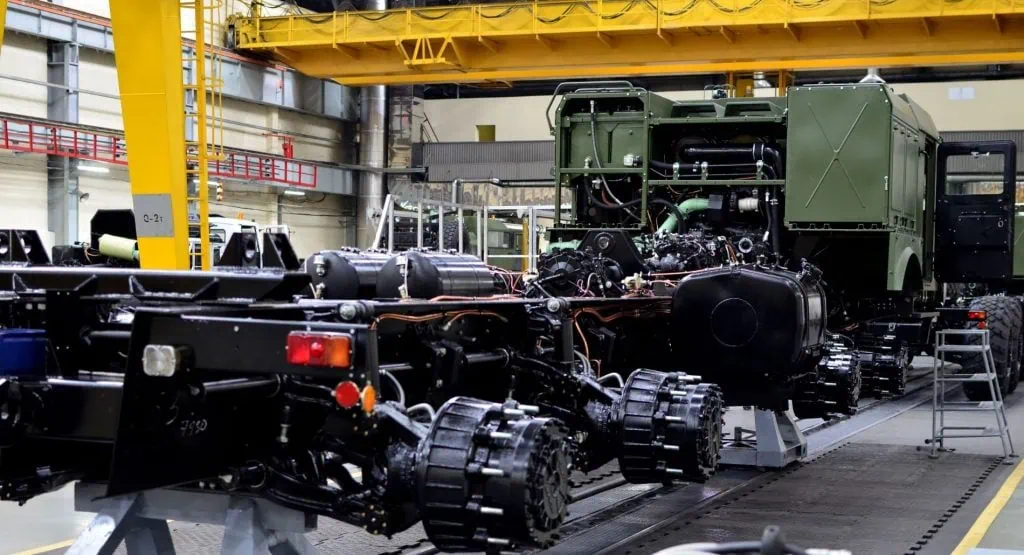
As the UK accelerates defence investment and looks to reinforce sovereign manufacturing capability, the role of agile, high-quality supply chain partners is coming into sharper focus. For Regent Engineering Co (Walsall) Ltd, the opportunity is not simply about entering the defence sector—it is about supporting and strengthening the domestic industrial base that underpins it.
With government plans to increase defence and national security spending to 5% of GDP by 2035, attention is turning to how UK-based manufacturers can deliver resilient, responsive and locally anchored supply chains for prime contractors such as BAE Systems and Babcock International.
Stuart Whitehouse, Director at Regent Engineering, believes SMEs have a critical role to play in enabling sovereign capability—through scale and through responsiveness and reliability.
“When we talk about sovereign manufacturing, it’s more important than just where things are made—it’s about how resilient and responsive that supply chain is, by being on the doorstep of a number of defence OEMs for instance, we offer a resilient supply chain solution by being quick to respond and close to our customers” he says.
“Businesses like ours can offer agility that larger organisations often can’t. We can react quickly, adapt to changing requirements, and support programmes in a way that strengthens the overall capability of the UK supply chain, assisted by our investment in automation and unique capabilities such as our robotic welding cell.”
Rather than positioning itself as a direct supplier to government, Regent Engineering is focused on embedding within established defence supply networks as a dependable Tier 2/3 partner.
Operating from the West Midlands, Regent Engineering already delivers precision machining and batch production services that are highly transferable into defence applications.
Its strategy is to align closely with the requirements of major contractors, supporting them as an extension of their own manufacturing capability.
“Our role is to support the primes – by being a reliable, high-quality partner within their supply chain,” Whitehouse explains.
“If they need capacity, consistency or rapid turnaround, we want to be the business they trust to deliver without hesitation.”
This positioning reflects a broader shift in how defence supply chains are evolving, with greater emphasis on resilience, reshoring and reducing reliance on overseas suppliers.
However, Whitehouse is clear that participating in defence requires more than simply having available machine capacity. It demands a commitment to continuous improvement and alignment with sector expectations.
“Agility only matters if it’s backed up by quality and compliance,” he says. “Defence customers expect full traceability, robust systems and absolute consistency.”
“We’re investing in the processes and accreditations needed to operate at that level—and to sustain it long term.”
The West Midlands’ deep-rooted engineering expertise positions it as a key contributor to the UK’s defence ambitions, particularly as more work is expected to flow through regional supply chains.
Whitehouse sees Regent Engineering’s location as a strategic advantage.
“There’s a concentration of skills and capability here that’s hard to replicate,” he says. “That puts businesses like ours in a strong position to support the growth of UK defence manufacturing.”
“If the goal is to build a more self-reliant, sovereign capability, then strengthening regional supply chains is a big part of that.”
As defence procurement becomes more complex and interconnected, collaboration remains central to unlocking opportunities for SMEs.
For Regent Engineering, that means building long-term relationships rather than pursuing one-off contracts.
“We see ourselves as part of a wider ecosystem,” Whitehouse adds. “Success comes from working closely with customers, understanding their challenges, and integrating into their supply chain in a meaningful way.”
“It’s not about competing with larger organisations—it’s about complementing them. With our 700 tonne press capacity for instance, it is a capability that could compliment other manufacturers with a press capability that perhaps they don’t offer.”
While the scale of defence spending presents immediate opportunities, Regent Engineering’s strategy is firmly rooted in long-term positioning.
“This is about building something sustainable,” Whitehouse concludes. “If we can establish ourselves as a trusted, agile partner within the UK defence supply chain, we’re contributing to something much bigger than individual contracts.”
“We’re helping to reinforce the UK’s manufacturing capability at a time when it really matters.”
As the government’s defence strategy continues to unfold, companies like Regent Engineering are demonstrating how SMEs can play a pivotal role—not at the front line of procurement, but at the heart of a more resilient, sovereign industrial base.