
Rapidly Deployable Infrastructure Will Become a Strategic Defence Capability, Says Regent Engineering
As governments across Europe commit to unprecedented levels of defence investment, attention is naturally focused on new aircraft, vehicles, weapons systems and military technology. Yet behind every operational capability lies another challenge that receives far less attention: creating safe, reliable infrastructure wherever armed forces need to operate.
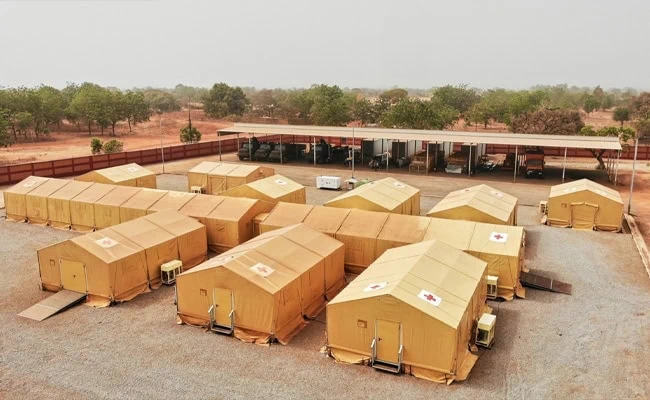
From temporary accommodation and logistics hubs to maintenance facilities, command centres and humanitarian deployments, modern military operations increasingly rely on infrastructure that can be established quickly, adapted easily and removed without permanent impact. Recent European defence initiatives and rising NATO investment commitments are placing greater emphasis on military mobility, resilience and deployable capability across the continent.
For Regent Engineering, manufacturer of the modular FloorStak flooring and levelling system, this reflects a broader shift in defence thinking. The conversation is moving beyond permanent military estates towards flexible infrastructure that can respond to changing operational requirements.
Unlike traditional temporary flooring or access solutions that are often designed for single projects, reusable engineered systems can be deployed repeatedly across multiple locations, providing stable access over uneven or sensitive ground while reducing installation time, transport requirements and environmental impact.
As military exercises become more frequent and defence organisations seek greater operational agility, the ability to establish safe working environments rapidly is becoming an increasingly valuable capability.
Stuart Whitehouse, Managing Director of Regent Engineering, believes infrastructure should now be viewed as an operational asset rather than simply a construction requirement.
“Modern defence operations demand flexibility. Whether supporting military exercises, temporary accommodation, engineering works or humanitarian deployments, organisations need infrastructure that can be installed quickly, perform reliably and be redeployed wherever it is needed next.
“The days of relying solely on permanent infrastructure are changing. Defence organisations are increasingly looking for engineered systems that can move with operations while maintaining the highest standards of safety and performance.”
FloorStak’s modular design allows platforms, walkways, ramps and level working areas to be installed across challenging terrain without extensive ground preparation, making the system suitable for defence estates, field operations and temporary operational facilities where conditions can change rapidly.
Whitehouse believes that reusable infrastructure also delivers long-term commercial and environmental benefits.
“When equipment can be used again and again across multiple projects, the value extends far beyond the initial investment. Defence procurement is increasingly considering lifetime performance, speed of deployment and operational resilience alongside purchase price.
“Engineering solutions that reduce waste, improve productivity and remain available for future deployments will become an increasingly important part of the defence supply chain.”
As defence investment continues to accelerate across the UK and Europe, the supporting infrastructure that enables personnel, equipment and operations to function effectively may prove just as important as the platforms themselves.
For manufacturers developing modular, reusable engineering solutions, the next generation of defence capability will not only be measured by what can be built, but by how quickly the infrastructure supporting it can be deployed wherever it is required.