
From Defence to Disaster Response: Modular Infrastructure Moves Up the Resilience Agenda
Rapidly deployable infrastructure is taking on greater strategic importance as governments, defence organisations and major industries strengthen their ability to respond quickly to changing operational requirements.
Across defence, aerospace, emergency response and critical infrastructure, modularity is increasingly influencing how facilities are designed, transported, assembled and redeployed.
It is an environment that presents an interesting opportunity for British manufacturers such as Regent Engineering, whose FloorStak® professional floor support and levelling system provides an engineered foundation for temporary and rapidly deployed structures.
Manufactured in the Black Country, FloorStak can be configured to create level floors and platforms over uneven surfaces, providing a foundation upon which temporary facilities can be developed.
Potential applications span operational accommodation, maintenance facilities, storage areas, command environments, temporary workshops, logistics hubs, aerospace support facilities and other rapidly established spaces.
Stuart Whitehouse, Managing Director of Regent Engineering, believes physical infrastructure has an important role to play in the wider resilience conversation.
“When people talk about rapidly deployable capability, attention naturally goes to the structure or facility being deployed, but everything has to start with a suitable foundation,” he explained.
“Creating a stable and level working surface can be one of the first requirements. FloorStak provides an engineered approach that can be transported, assembled, adjusted and subsequently used again.”
Its modular construction means individual FloorStak components can be configured according to the requirements of a particular installation.
That provides another valuable characteristic for organisations operating fleets of temporary infrastructure: standardisation.
Rather than creating a completely new support arrangement for every application, modular components can form part of an infrastructure inventory capable of supporting multiple deployments.
“Resilience is closely connected to preparedness,” Whitehouse continued. “Having equipment available that teams understand, that can be transported efficiently and that offers flexibility across different locations creates significant operational value.
“The real strength of modular engineering is that the system can evolve with the requirement.”
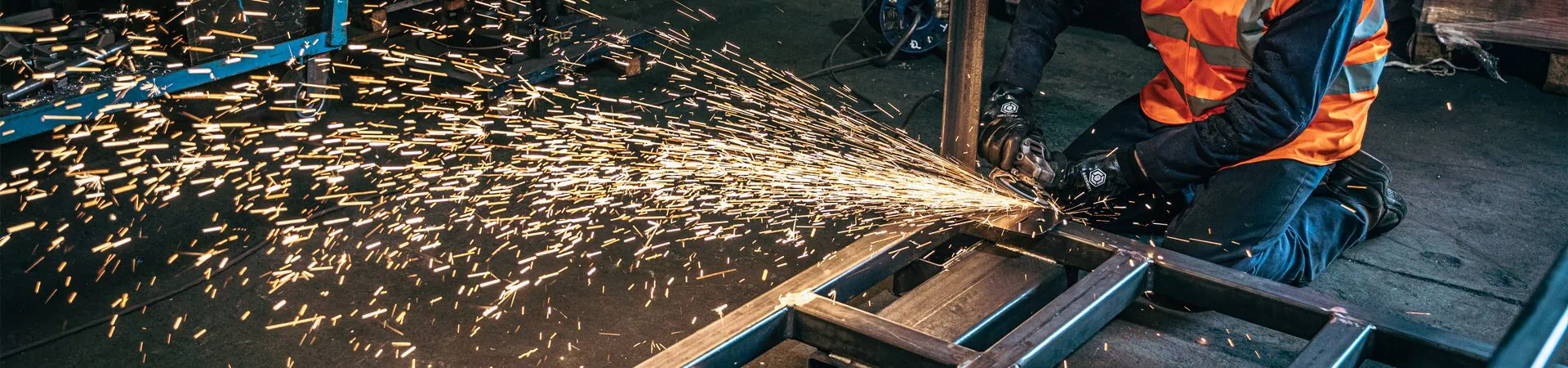
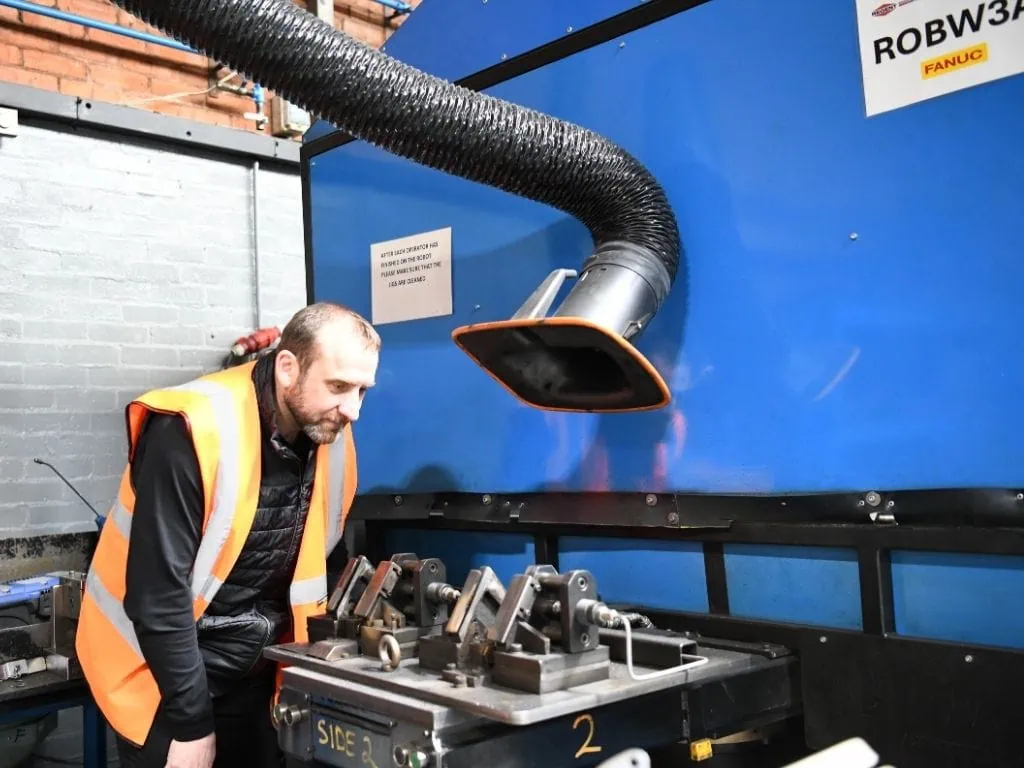
Regent brings more than eight decades of manufacturing experience to the product, supported by in-house capabilities spanning metal pressings, fabrication, welding and assembly.
Those capabilities also enable bespoke elements to be incorporated alongside standard FloorStak components for specialist projects.
As resilience becomes embedded within infrastructure planning, engineering solutions capable of being deployed, adapted, recovered and redeployed are likely to play an increasingly prominent role.
For FloorStak, that creates an opportunity extending far beyond the floor itself.