
Buy Once, Deploy Many Times: The Engineering Case for Reusable Infrastructure
Procurement decisions across British industry are increasingly being viewed across the entire working life of an asset, creating fresh opportunities for engineered systems designed around durability, adaptability and reuse.
For temporary infrastructure, that approach can transform the economics of a project.
Instead of viewing every installation as an individual requirement, organisations can invest in modular equipment capable of moving between projects, sites and applications.
It is a principle at the heart of FloorStak®, the professional floor support and levelling system manufactured by Regent Engineering in the Black Country.
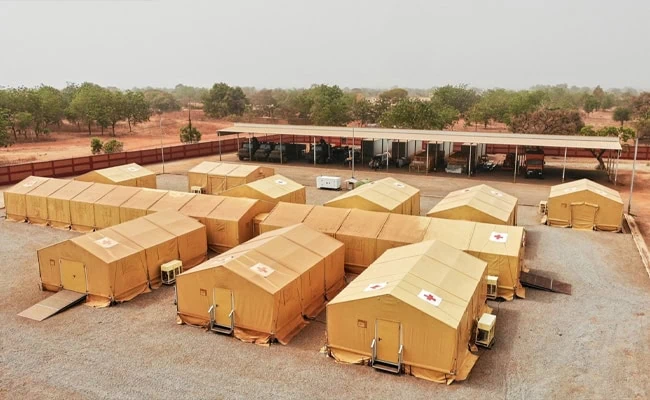
FloorStak uses modular engineered components to create level platforms over uneven surfaces, supporting temporary floors, walkways, platforms and structures across applications including events, industry, aerospace and defence.
Once an installation has served its purpose, the system can be dismantled and its components stored for future deployment.
Stuart Whitehouse, Managing Director of Regent Engineering, says the commercial conversation around reusable infrastructure extends across productivity, sustainability and long-term value.
“Customers increasingly look at what an investment can deliver throughout its working life,” he said.
“If an engineered system can be configured for one project, recovered afterwards and then used for another requirement, it creates value every time it is deployed.”
That approach also aligns with the growing emphasis on resource efficiency within manufacturing and construction.
Long-life modular components provide organisations with an opportunity to retain materials within productive use while reducing the requirement to source and construct entirely new support solutions for successive projects.
There are operational advantages too.
A standardised system can simplify planning, storage and installation while allowing teams to become familiar with the equipment they are using.
FloorStak’s adjustability also means the same component inventory can accommodate different heights, layouts and site conditions.
Whitehouse added: “Repeatability is a major advantage of good engineering. Customers know the components, understand how the system works and can configure it around the next application.
“That creates an infrastructure asset rather than something associated with a single project.”
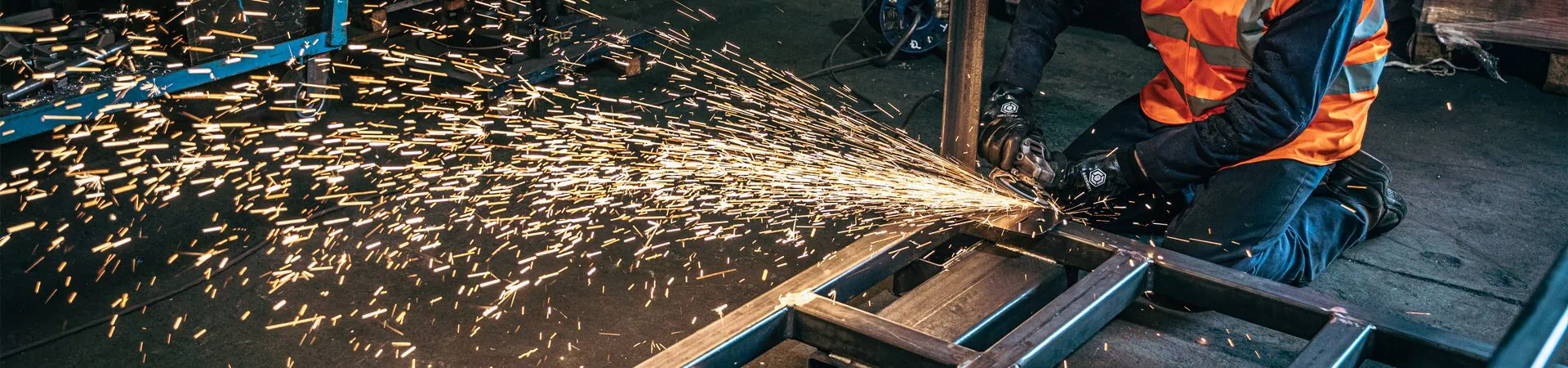
Regent’s wider capabilities in presswork, welded assemblies and steel fabrication provide the manufacturing expertise behind the system and allow bespoke components to complement the standard FloorStak range where required.
The result reflects a broader direction for UK manufacturing: creating more value from materials, engineering expertise and productive assets.
For organisations managing temporary infrastructure, the principle is compellingly simple — invest in engineering that is ready to work again.